Blog

Three Time Management Mind Hacks You Can Use Today

Do you wish you had more time? Most of us do. Time is one of life’s most precious commodities. As a matter of fact, I once heard time referred to as the “currency of life.” Yet so often we treat time as if it were disposable.

One of the reasons time is so precious is that it is ticking away. You have less time on this earth today than you did yesterday. That’s not meant to be morbid. It’s meant to be real.

I’ve done a lot of research on time management and have tried pretty much every time management strategy out there. I’ve even taught a course on the subject. But it’s still a constant challenge that requires me to remain mindful and vigilant every day. With all the distractions in our society, it’s way too easy to lose focus and to find time wasting away. I’m guessing you can relate.

Keep reading!

Hydration 101: The Importance of Water Intake as you Age

We all know that drinking water is essential to our health. As a matter of fact, water is second only to oxygen in its importance to our survival. Your cells are crying out for water to support your body’s essential functions.

The standard recommendation is 64 ounces per day, or approximately half of your body weight in ounces, whichever is greater. This rule of thumb is still a good one, no matter your age, and can be modified as needed based on the climate you live in or any underlying health conditions.

Of course, water is also an important part of weight management and glowing skin. And, no matter our age, we can all get on board with that.

But did you know that it is even more important to monitor your water intake as you age? The older we get, the less efficient our bodies become at storing water. On top of this, our body’s dehydration signals tend to weaken as we age, so we may not feel thirsty until we are already dehydrated.

Keep reading!

Antioxidants and Aging – What’s the Connection?

You’ve probably heard about free radicals (which sound pretty dangerous, right?) and antioxidants, but have you ever stopped to consider the battle they’re fighting inside your body? And have you thought about what the relationship really is between antioxidants and aging?

So What’s the Deal with Free Radicals and Antioxidants? 

In short, your body goes through a very precise process of energy metabolism involving molecules and electrons. When stray high-energy electrons leak out and are scooped up by oxygen in your cells, the oxygen becomes unstable and highly reactive and is known as a free radical. When free radicals come into contact with DNA, they can cause cellular damage, which contributes to aging – and can lead to a wide range of diseases. 

As explained in a nutshell by Earl Stadtman, former chief of the Laboratory of Biochemistry at the National Heart Institute, “Aging is a disease. The human lifespan simply reflects the level of free radical damage that accumulates in cells. When enough damage accumulates, cells can’t survive properly anymore and they just give up.”

Now, not all free radicals are bad, and your body relies on some free radicals for cell regeneration. As with most things in life, it’s about balance. And this is where antioxidants come in. You can balance out the number of these reactive free radicals roaming around in your body by consuming foods that are rich in antioxidants. This slows down oxidative stress, keeping you healthier and younger from the inside out.

What are the Best Sources of Antioxidants?

No surprise here – your best source of antioxidants comes from the plant kingdom. So eat your fruits and vegetables (skin and all). Whole foods provide a balance of different types of antioxidants. The more varied your diet of fruits and vegetables, the better. 

Here’s a simple (but not all-inclusive) list of some of the fruits and vegetables that pack a high antioxidant punch:

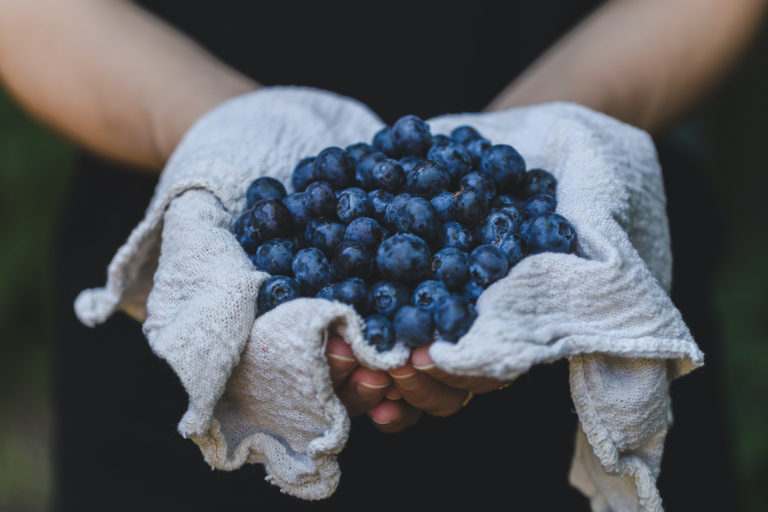
blueberries, raspberries, strawberries, spinach, oranges, beans, blackberries, kale, cranberries, pecans, walnuts, artichokes, red cabbage, beets, grapes, prunes, acai berries, Goji berries, plums, alfalfa sprouts, broccoli, and cherries

Another great source of antioxidants is spices and herbs. By adding a dash of cinnamon or oregano to your favorite meal, you are upping your antioxidant intake.

And yes, dark chocolate belongs on the list too. Dark chocolate is loaded with polyphenols and flavanols, which are high in antioxidant activity. Just be aware of the sugar and fat content, and limit your intake to a maximum of an ounce per day.

As a society, we spend so much money on products and services to reverse the signs of aging, from creams to serums to powders and even plastic surgery. Maybe the answer is a little simpler than we realize. Fruits and vegetables can help prevent damage from happening in the first place. The relationship between antioxidants and aging is pretty strong. In this battle, I’m going with antioxidants for the win!


Why Dandelion Tea May Belong in Your Daily Ritual

dandelion tea wellness clan

Have you had your dandelion tea today?

It turns out the root, leaves, and flower of the dandelion may be one of the healthiest things growing outside your window – or on your neighbor’s lawn. Believe it or not, the dandelion is actually a member of the daisy family, and is classified by botanists as an herb, not as a weed. And the health benefits it packs are pretty amazing.


Health Benefits of Dandelion

Dandelions are rich in vitamins A, C, E, and K, as well as calcium, potassium, fiber, and antioxidants. They are widely believed to help repair and detoxify the liver, improve digestion, protect bones, regulate blood sugar levels, fight oxidation of bad cholesterol, prevent UTIs, support weight loss, promote gut health, reduce inflammation, and the list goes on. Several studies have even shown that dandelion root may have cancer-fighting properties.

Consuming Dandelion

The leaves, flowers, and root of the dandelion are all edible. While dandelion is available in several forms, including as a powder or capsule, you may not want to pick your own due to the potential for pesticide or animal bacteria.

But no worries – you can most likely find dandelion tea at your local grocery store. Look for a tea that includes the root, as the root contains many of the herb’s medicinal properties. Traditional Medicinals makes a good dandelion tea and is widely available. Another top choice is Organic Dandelion Root Tea by Buddha Teas.

I don’t love the flavor of dandelion tea as much as I do black tea, green tea, or peppermint tea. But I drink a mug most days, and it’s still enjoyable. Because it’s an herbal tea (dandelion plus water – that’s it), it contains no caffeine…so it won’t keep you up at night if you want to relax with a cup in the evening. (Side note – it’s a healthier option than wine – just saying! I’m speaking to myself too!) You can also add mint, lemon, cinnamon, honey, ginger, or turmeric to suit your taste.

Next time you see a dandelion, I hope you pause and appreciate what a nutritional powerhouse it is!

Should You Really Switch to Natural Deodorant?

natural deodorant wellness clanAntiperspirants have gotten a bad rap lately. This is mainly because they contain aluminum-based compounds to plug the sweat glands. Some fear that the aluminum in deodorant (if the deodorant has an antiperspirant component) is absorbed into the skin and can have harmful effects. Studies have even suggested a link to Alzheimer’s Disease and breast cancer.

So is there a link? As of now, there is no conclusive evidence tying antiperspirants to disease. But there also isn’t conclusive evidence to rule out a link either. Especially with my family history (Alzheimer’s Disease and breast cancer), I’m not taking the chance.

Something else to consider: your underarm “health.” Antiperspirants could actually alter your skin’s ecosystem, and even your immune system, by messing with the levels of good bacteria in your armpits. Sweat is a good thing!

What is a Natural Deodorant Anyway?

You may be wondering what natural deodorant is made of. There are many concoctions out there, but the three key components are:

  • an ingredient that disinfects, such as coconut oil or tea tree oil
  • an ingredient with a pleasant scent, such as lavender, bergamot, or lemongrass essential oil
  • an ingredient that is naturally absorbent and fights moisture, such as baking soda, arrowroot powder, or cornstarch

Many also include an ingredient that is soothing to your skin, such as shea butter.

When You’re Ready to Make the Switch

If you’ve decided to embrace a more natural armpit (and lose the yellow armpit stain in the process), there are many natural deodorants to choose from. I’ve tried several, and it really comes down to personal preference. For example, one of the most popular brands was too “sandpapery” for me. I like Native for a stick deodorant. 

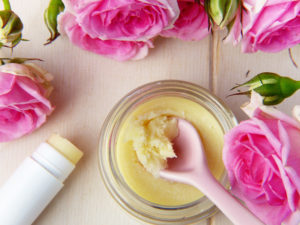
But my favorite deodorant of all comes as a cream in a pot. I discovered it at a farmers market a couple years ago. It’s made at a small farm – You’re in Luck Farm – in Charlottesville, Virginia. This place is all about farm fresh skincare, the scents are wonderful, and the stuff works. You can place an order online, and a beautifully packaged box will arrive on your doorstep. (I receive no kickbacks – I just love their deodorant!)

You could also make your own deodorant if you’re up for it. There are many online “recipes” to play around with.

Keep in mind that it will likely take your body time to adjust to your natural deodorant. A hot, sticky summer month may not be the best time to make the switch.

Natural Deodorants for the Win

While the research on antiperspirants isn’t conclusive, one thing’s for sure: there is peace of mind that comes from choosing natural over synthetic whenever possible. And for me, I love to support a small business that never tests on animals. That’s a win-win-win.